

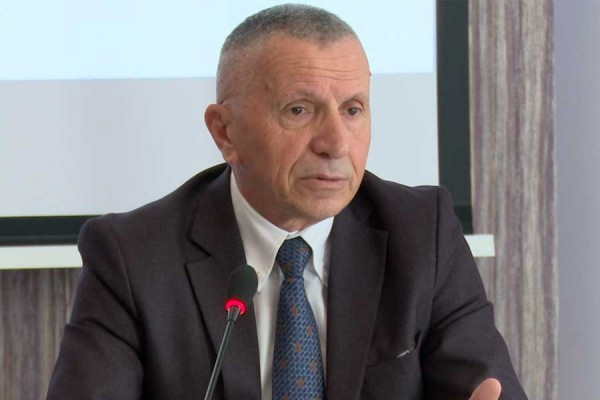
On 5 January 2026, Shaip Kamberi, the only Albanian MP in the Serbian Parliament, criticized President Aleksandar Vučić, claiming he is surviving in power through “artificial respiration.” Kamberi asserted that 2026 is an election year in Serbia, which could mark the end of Vučić’s leadership amidst both internal and external crises. According to him, the upcoming elections may symbolize a significant turning point, as Vučić could lose power due to widespread dissatisfaction and potential election manipulations.


Kamberi highlighted the severity of the political crisis in Serbia, suggesting it is the deepest since the assassination of Prime Minister Zoran Đinđić in 2003. He expressed concern over Vučić’s increasingly diminished legitimacy, exacerbated by failures in foreign policy and severe critiques from the European Union regarding Serbia’s democratic stagnation. He referred to the latest U.S. legislation signed by Donald Trump, which discusses democratic setbacks in Serbia, labeling the country as the only one in the Balkans facing this issue.
On the topic of minority rights, Kamberi urged the next Kosovo government to prioritize the Preševo Valley as a national issue. He outlined efforts he has made to advocate for the rights of Albanian minorities in Serbia, including proposals for establishing local prosecution and appellate courts in the historically Albanian regions of Preševo and Bujanovac.


Kamberi painted a grim picture of the political atmosphere in Serbia, describing it as “toxic,” dominated by Vučić’s party and its allies, which have undermined minority representation, including that of Hungarians and Bosniaks. He noted that the Serbian government has not been receptive to initiatives aimed at improving the situation for Albanians, undermining both their rights and the broader goal of integrating Serbia into the European Union.
He warned about the dire implications of not recruiting Albanian police officers since 2016, predicting a potential future where there are no Albanian representatives in local law enforcement. This situation could revert the region back to conditions reminiscent of 1999-2000.
Moreover, Kamberi pointed to recent protests in Preševo, Bujanovac, and Medveđa, where citizens rallied against discriminatory actions by Serbian authorities. As per the last population census in 2022, over 60,000 Albanians reside in Serbia, underscoring the ongoing need for equitable representation and rights protection for minorities.