

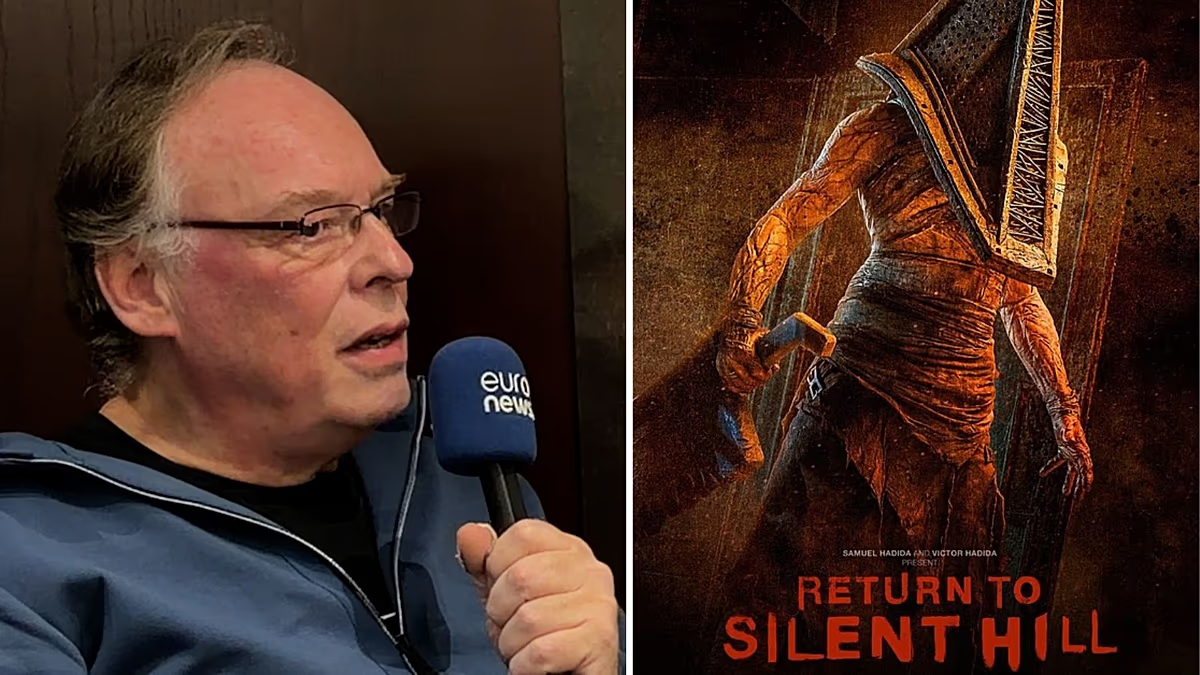
Being a fan of video games can be challenging, especially when it comes to their film adaptations. Nevertheless, some filmmakers, like French director Christophe Gans, continue to take on this venture. Gans, known for “Crying Freeman” and “Brotherhood of the Wolf,” adapted the first Silent Hill game in 2006. While it received mixed reviews, it has developed a cult following among gaming enthusiasts, who often regard it as one of the best video game adaptations.


Two decades later, Gans is back with “Return To Silent Hill,” a loose take on the critically acclaimed “Silent Hill 2.” The film follows James Sunderland, who receives a mysterious letter from his missing wife, leading him back to the eerie town of Silent Hill. Released in US cinemas recently and set to hit European screens next month, the movie has faced harsh criticism, currently holding a mere 19% on Rotten Tomatoes.
While the film is accessible for newcomers to the franchise, it suffers from poor acting, clichéd narration, and subpar CGI. Yet, some argue that these elements reflect the protagonist’s fractured mental state. Gans acknowledges the pressure of adapting such a beloved game and maintains that his version is merely a “proposition” rather than a strict adaptation. He emphasizes that each interpretation of the game is valid, and his film represents his take on the original material.


In an interview, Gans shared that he had initially contemplated adapting “Silent Hill 2” back in 2006 but deemed it too complex for the audience at the time. He felt the psychological depth of the game required a more modern approach. Addressing criticism, he understands that his choices may not resonate with all fans but insists on his sincerity in the filmmaking process.
Themes of guilt, repressed trauma, and madness are explored through the protagonist’s psyche, drawing parallels with the works of Edgar Allan Poe. Gans’ commitment to practical effects over CGI also speaks to his dedication to the art form.
As cinema faces an evolving landscape dominated by streaming, Gans remains hopeful that audiences will return to theaters, emphasizing the communal experience of watching horror films. Ultimately, “Return To Silent Hill,” despite its flaws, represents an ambitious reinterpretation of a classic, and Gans hopes it finds its place in cinematic history.